To download a PDF of this guide in English, click here,
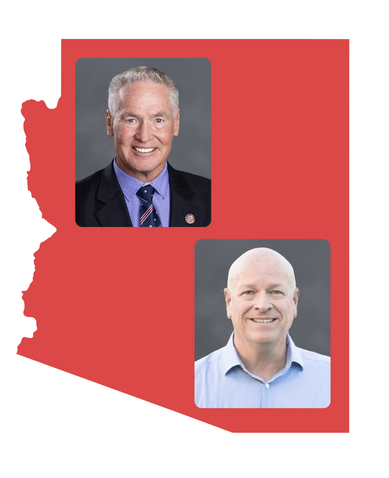
The election on November 3 will decide two of the five seats on the Arizona Corporation Commission. Republicans Ralph Heap and incumbent commissioner Kevin Thompson are competing against Democrats Jonathon Hill and Clara Pratte. It’s a top-two election; out of the four, the top-two vote-getters will receive four-year terms. The current partisan makeup of the Commission is five Republicans and zero Democrats, so the Republicans will retain a majority on the Commission no matter the outcome of this election.
The Commission regulates public utilities, railroad and pipeline safety, and certain securities, and is responsible for the incorporation of businesses and organizations. The Commission is responsible for ensuring quality service and setting the rates of public utilities. It is tasked with trying to balance the fair service for ratepayers with the interests of the utility companies in making a fair profit. The Commission is required to sign off on any plans to build power plants or transmission lines above a designated size. The Arizona Corporation Commission is granted its authority by Article XV of the Arizona Constitution.
Because of public concerns about affordability, the Commission has been under increased scrutiny in recent years. During this period the Commission has undertaken many actions that have affected Arizona residents. The Commission voted to raise Arizona Public Service’s rates by 8% in both 2023 and 2024, approved a new data center project in Pima County in 2025, cracked down on business application fraud, and is currently in a legal dispute with the state Attorney General over the Commission’s plan to repeal energy efficiency standards.
Here’s background on the candidates’ public statements, actions, and experience. Follow our links to get more information.



Background
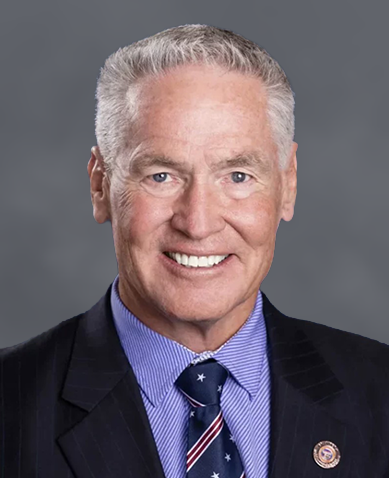
Dr. Ralph Heap is currently a member of the Arizona House of Representatives representing district 10, where he has served since 2025. He earned a bachelor’s degree from Arizona State University and a medical degree from the University of Arizona. He then practiced orthopedic surgery in Arizona’s East Valley for over 40 years.
• On coal, criticized the Commission’s decision to convert the Cholla coal power plant into a natural gas plant. Said “coal gives us the base load power that we need.”
• On data centers, as an Arizona state representative Heap voted to prevent Arizona counties from regulating small nuclear reactors used to power data centers.
• On infrastructure, supports infrastructure investments for rural communities to improve water and power access.
• On market competition, says that the Commission should “empower local entrepreneurs and energy innovators” instead of favoring “legacy utility cartels.”
• On renewable energy, as an AZ representative Heap introduced a bill that would designate solar and wind developments as public nuisances. Would oppose any “excessive renewable mandates.”
• On transparency, says that all rate cases, contracts, and rulemaking discussions should be available for the public to see, and that all commissioner discussions with utility lobbyists should be made public as well.
Website: azcc.vote
Background
Jonathon Hill is currently a mission planner at Arizona State’s Mars Space Flight Facility. In this role he operates the THEMIS camera currently orbiting Mars. He earned a bachelor’s degree in Russian, a master’s degree in aerospace engineering, a master’s degree in geological sciences, and a PhD in geological sciences, all from Arizona State University.
• On coal, said that coal is “one of the most expensive, outdated and polluting forms of energy on Earth.”
• On cybersecurity, says that public utilities are increasingly at risk from attacks by hackers. Says utility companies need to implement cybersecurity precautions to avoid service disruptions.
• On data centers, supports the Arizona governor and legislature’s deal to halt data center tax breaks for the next three years. Supports extending this moratorium.
• On groundwater, says that his PhD in geological sciences will allow him to make well-informed decisions on how to manage groundwater aquifers throughout Arizona.
• On renewable energy, is “committed to implementing clean energy policies that will benefit Arizona’s environment.” Says that the Commission should support the solar industry.
• On utility rates, says that tapping into wind and solar power, as well as maintaining the reliability of the grid, will lead to more affordable energy for ratepayers.
Website: votehillaz.com
Background
Clara Pratte currently works as the CEO and Founder of Strongbow Strategies, a consulting firm, and as the co-founder and executive chair of Navajo Power, a clean energy firm empowering Indigenous communities. She earned a bachelor’s degree in marketing from the University of Arizona and a master’s degree in public policy and management from Carnegie Mellon University. She has worked in numerous roles with the Navajo Nation and advising government officials, including serving as the Tribal engagement director for Joe Biden’s 2020 presidential campaign and as a member of Biden’s transition team.
• On coal, said that it is not economically feasible to preserve existing coal plants. “It’s also not the best source of energy any longer for our communities.
• On data centers, supports the Arizona governor and legislature’s deal to halt data center tax breaks for the next three years. Supports extending this moratorium.
• On infrastructure, says that longtime neglect in addressing water utility repairs and upgrades has led to recent increases in water bills, “in some cases 300% over the last year.” Says “it’s really not fair to pass off the poor planning onto the customers.”
• On protecting seniors, says “the current Corporation Commission is not doing even close to enough to ensure Arizona’s seniors are protected from power shut offs.”
• On renewable energy, says that expanding wind and solar power will lower bills, create jobs, and benefit the environment.
• On utility rates, regarding rising electricity rates, said “affordability is the number one issue that I’m concerned about.” It’s a “crisis.”
Website: claraforaz.com
Background
Kevin Thompson currently serves as the chair of the Arizona Corporation Commission, which he has been a member of since 2023. He earned a bachelor’s degree in mechanical engineering from the University of Nevada, Las Vegas. He is a veteran of the United States Air Force and served in Operation Desert Storm. He worked as manager of new business development for Southwest Gas for 12 years and co-founded the Mesa Veterans Resource Center. Before being elected to the Corporation Commission he served two terms on Mesa City Council from 2015 until 2023.
• On coal, supported converting the Cholla coal power plant into a natural gas plant, stating that keeping it as a coal plant would be too costly for ratepayers.
• On data centers, opened an official Commission docket on data center construction to allow for review of data center costs, policies, and to permit the public to comment on these issues.
• On infrastructure, says that the Commission should be granted greater authority by the Arizona legislature to regulate utility-scale battery storage.
• On energy efficiency, voted to initiate repeal of the Demand Side Management/Energy Efficiency standards, which required utilities to meet efficiency standards. Said that the “energy efficiency mandate reached its goals years ago.”
• On renewable energy, voted to repeal Arizona’s Renewable Energy Standard and Tariff rules, which had been in place since 2006 and expanded renewable energy production.
• On utility rates, voted to approve an 8% increase in rates for the Arizona Public Service Company in 2024.
Website: thompsonforcorpcomm.com
guides.vote is a nonpartisan effort to show where candidates stand. We do not support or oppose any political party or candidate. Use the QR code on the right for online versions, including links to credible sources. See Vote411.org for information on how to vote. For campuses, see Campus Vote Project’s state-specific guides to student voting rules.