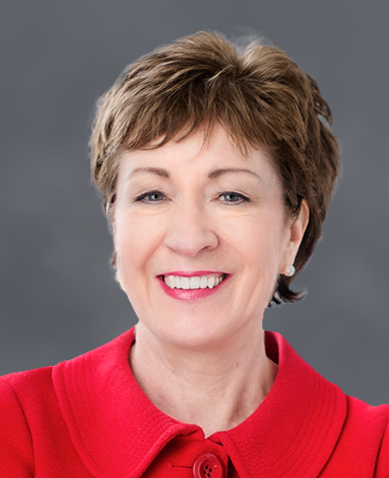

Mixed. Introduced a bill to codify abortion rights, with protections for providers with “religious objections to performing abortions.” Voted against an abortion rights bill; said it did not include “conscience protections.” Overturning Roe v. Wade was a “radical jolt to the country.”
Mixed. Sponsored a bill to ban offshore drilling in Gulf of Maine. Voted to fund battery production; holds “great promise in the fight against climate change.” Voted to open up 1.7 million acres of public lands for coal leasing. Voted against $369 billion in clean energy investments. Voted to not maintain existing wind & solar tax credits. Voted to extend the residential clean energy tax credit.
Mostly yes. “Climate change is a profound threat to our environment and economy.” Voted to boost offshore wind energy in Maine. In 2020, introduced a bill to incentivize the production of wood energy in Maine “to reduce our reliance on heating oil.” Voted to prevent local municipalities from banning any specific type of energy.
After George Floyd’s death, sponsored a bill to use incentives to increase use of body cameras, improve training, and diminish chokeholds, without requiring such reforms. Voted against funding local law enforcement hiring programs.
Mostly increase. Calls for expanded access “to robust workforce training.” Introduced a bill to end trade practices that undercut American specialty crops. Voted for $1 trillion in new infrastructure projects, including road repair, bridges, broadband internet, and rail lines. Voted to not put funds toward building 7 million homes.
Increase. Would “stop these electricity rate hikes, cut egregious utility profits and reinvest in our grid.” Would “stop Wall Street from buying up Maine” and give “tax credits…and down payment assistance” for housing. Would invest in childcare. Would take on “corporate price-gouging.” Would pass the “Buy American, Build Maine Act.”
Tighten. Would “stand up to corporate polluters” and “protect our air, drinking water, forests, and farmland from harmful chemicals like glyphosate, PFAS.” In 2021, sponsored a bill to ban synthetic herbicide spraying in the forest industry. Would boost funding to increase conserved land in Maine to 30% by 2030.
Tighten. Voted to expand background checks, add serious dating partners to laws that bar domestic abusers from purchasing guns, and implement red flag laws. Introduced a bill making it a crime to act as a straw purchaser of guns; would reduce violence “without infringing upon…rights.
Mostly increase. Voted to extend Affordable Care Act subsidies. Introduced a bill to raise taxes on ultrawealthy income earners to help rural hospitals facing Medicaid cuts. Introduced a bill to lower the cost of insulin. Voted against the Big Beautiful Bill because of “the harmful impact it will have on Medicaid.” Voted against allowing government negotiation of Medicare drug prices.
Increase. “Healthcare is a human right.” Supports “Medicare for All on the national level” and “a public option here in Maine.” Voted to lower prescription drug prices by requiring plan costs to not exceed the referenced rate. Calls for taking on “big pharma” and going after “private equity in our hospitals.” “Healthcare is not, in my mind, a for-profit industry.”
Voted for $70 billion to fund ICE, and then nearly $70 billion more for ICE and CPB. Voted to rescind billions of dollars in ICE funding and put those funds to Medicaid. Voted to transfer ICE funds to fund DACA applications, and voted against redirecting ICE funds to child care block grants.
Mixed. In March, voted against limiting Trump’s power to wage war in Iran without congressional approval. In April, at the 60-day mark, supported an effort to end the operation. “Further military action against Iran must have a clear mission.”
Mixed. Introduced a bill providing federal recognition of same-sex and interracial marriages. Called it “common-sense legislation” that “provides certainty to millions of loving couples.” Voted for a federal ban on transgender athletes participating in women’s sports.
Expand. Calls his 2009 vote against same-sex legalization “my worst vote ever.” Would “pass comprehensive civil rights legislation protecting the LGBTQ+ community from discrimination.” Opposes banning transgender athletes from women’s sports.
Yes. In 2023 introduced a bill to gradually raise the federal minimum wage to $11 by 2028, indexing future increase to inflation. “I recognize the difficulties for anyone who is trying to make ends meet while earning the federal minimum wage.”
Mixed. In 2017 voted for Trump tax cuts, which included the largest one-time cut in the corporate tax rate and large tax breaks for the wealthy. In 2025, voted against extending those cuts. In 2021, voted against increasing taxes on corporations and the wealthy to pay for family services, health, and environment programs.
Mostly harder. Voted to require citizenship proof when registering to vote in federal elections. “The law is clear that in this country only American citizens are eligible to vote in federal elections.” Later voted to not require proof. Supports voter ID. Requiring “an ID at the polls…will improve the security of our federal elections.”
Easier. Opposed Question 1 on 2025 Maine ballot which would eliminate two days of absentee voting, ban requests for absentee ballots by phone or family members, and limit the number of drop boxes. “The last thing we should being [sic] doing is making it harder for workers, older folks and Mainers with disabilities to vote.”
guides.vote is a nonpartisan effort to show where candidates stand. We do not support or oppose any political party or candidate. We include candidates polling 15% or more. Check out the others including Brent Andrews (U), Sigrid Ann Olson (W), Gina Oswold (W), Joseph Steinberger, (FiH), Michael Turcotte (W), and Ashley Webb (W).Vote411.org offers guides to local races and how to vote. For campuses, see Campus Vote Project’s state-specific guides to student voting rules.